
What Is Cataract Surgery, And How Does It Help Us?
If the patient's vision gets cloudy, the doctor performs surgery to replace the natural eye lens with an artificial one. As a result of this completely safe and common surgery, known as cataract surgery, the patient’s vision is improved.
Cataracts come with age, and the patients do not always need surgery. Sometimes the impairment in vision due to cataracts is very low, and the doctor might recommend prescription glasses. Sometimes a visit to the doctor isn’t also necessary, and simple use of bright lighting while reading and magnifying glasses solve the problem.
People whose cataract has advanced a lot fail to clear the vision part of the driver’s test. As cataracts spread, they show more and more symptoms, like dim or blurred vision and double vision. These problems make it difficult for the person to engage in any activity requiring clear eyesight. Cataracts also make the person more sensitive to the sunlight, which might prevent him from being outdoors and engaging in sports like skiing or golf.
Also, sometimes the doctor might prescribe surgery for a cataract even in it doesn’t bother the patient. This is because sometimes, the cataract could be big enough to crowd the eye's interior, which increases the pressure on the eye.
The ophthalmologist takes the required measurements to choose the artificial lens. The patient is kept awake during the surgery, but the eye is numb to avoid pain. The surgeon cuts the front of the eye using a laser, and the cataract is broken up & sucked out. After which, the new lens is properly put in place. If the patient has a cataract in both eyes, the surgeries are performed at a gap of a couple of weeks to give the first eye time to heal.
Side effects of the cataract surgery are rarely observed, but if not properly performed, the patient can experience swelling, bleeding, retinal detachment, etc.
The patient may ordinarily experience some itching & soreness in their eyes after the surgery and also experience difficulty in seeing a bright light. To prevent infections, the doctor may prescribe eye drops to prevent disease. For a few days after the surgery, it is advisable not to engage in activities like driving, bending over, and picking up heavy things.
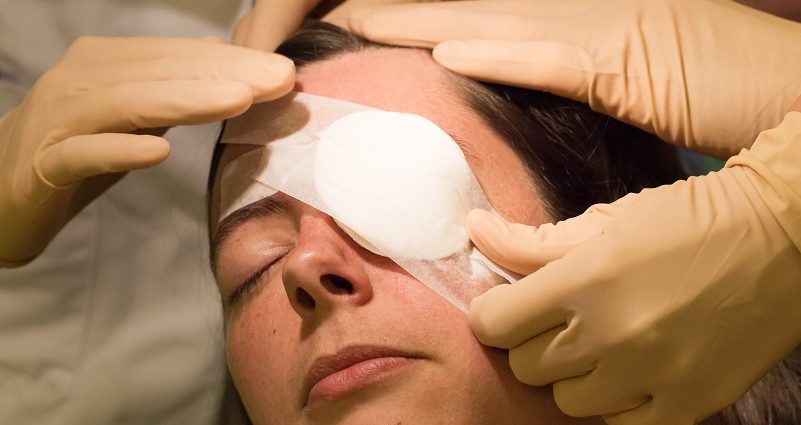
Initially, the doctor may suggest eye shields while sleeping, and any discomfort the patient faces should immediately be brought to the doctor's attention.
The eye is finally healed after 8 weeks, and most people see crystal clear after that, but few would still have to wear contact lenses or spectacles.
Sometimes right after the cataract surgery, the patient starts having cloudy vision again due to the thickening of the lens capsule, i.e., the part responsible for holding the artificial lens in place. This condition can be corrected by a procedure called YAG, in which the thickening of the lens capsule is opened up using a laser, thereby allowing more light through the artificial lens and clearing the cloudy vision.